01
Gravity Retaining Walls
Gravity walls rely purely on their own mass to resist soil pressure, using large, heavy materials like stone, concrete, or brick. They're thick at the base and often used for shorter walls. Simple to build, they suit residential landscaping projects needing straightforward, durable soil retention without reinforcement.
02
Cantilever Retaining Walls
Built with a reinforced concrete stem and base slab forming an inverted T-shape, cantilever walls use leverage rather than mass to hold back soil. They're efficient for taller walls, requiring less material than gravity walls while maintaining strong structural performance and stability.
03
Counterfort Retaining Walls
Similar to cantilever walls but with added triangular supports (counterforts) connecting the stem and base slab, these walls handle greater loads and heights. They're common in larger civil engineering projects like highways and dams, offering improved strength against high soil pressure and moisture.
04
Sheet Pile Retaining Walls
Made from thin, interlocking sections of steel, vinyl, or wood driven into soft soil, sheet pile walls suit tight spaces and waterfront applications. They're cost-effective for temporary or permanent use where excavation space is limited, though less suited to very tall retaining needs.
05
Segmental (Block) Retaining Walls
Constructed from interlocking concrete blocks without mortar, segmental walls are popular for residential landscaping due to their flexibility, ease of installation, and aesthetic variety. They allow curves and terracing, making them ideal for gardens, driveways, and moderate-height retaining applications.
06
Anchored Retaining Walls
These walls use cables or rods anchored deep into the ground behind the structure, providing extra strength for thin walls facing heavy loads. Anchored systems suit challenging soil conditions or tall walls where additional reinforcement is needed beyond the wall's own structural mass.
07
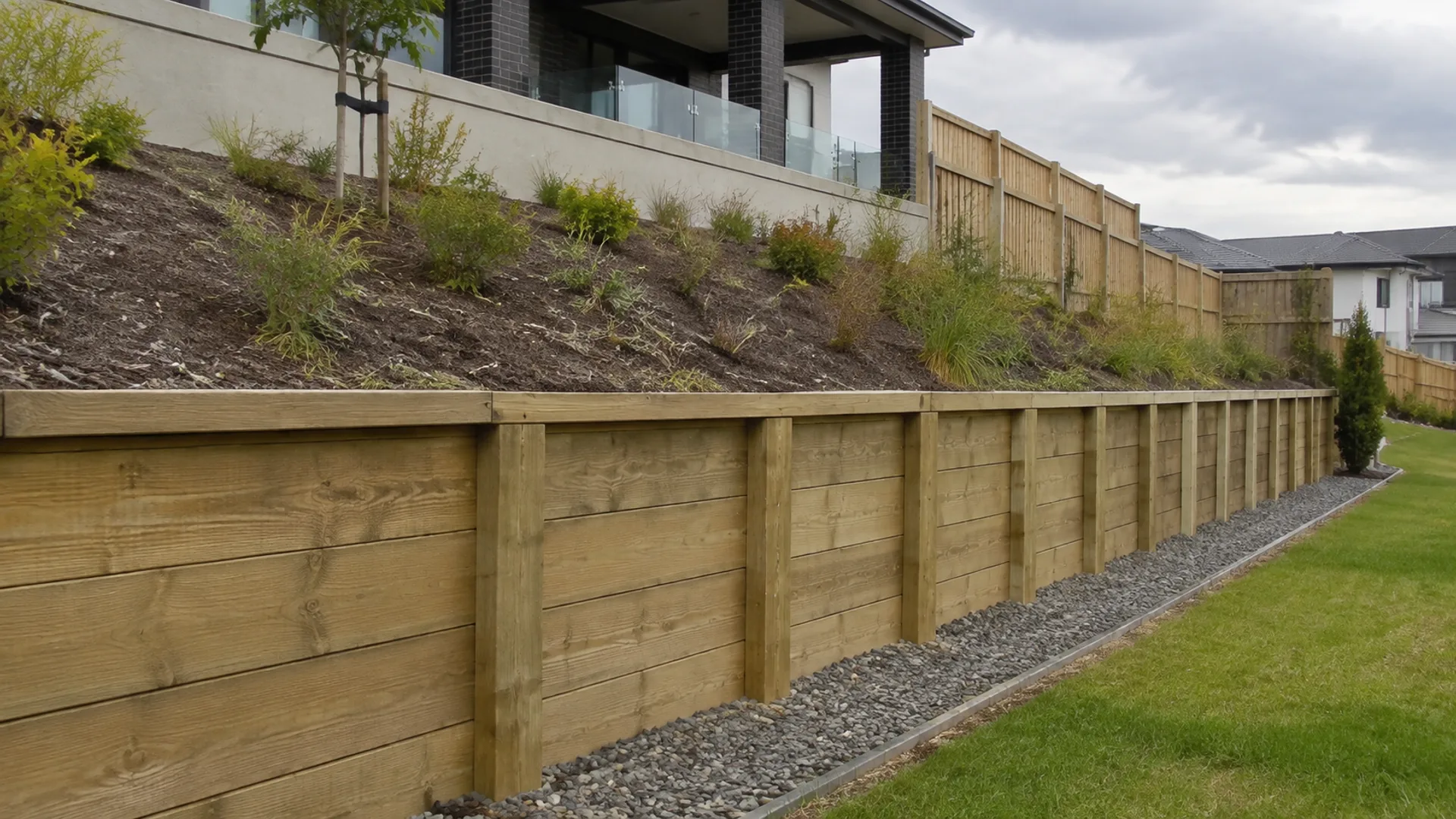
Timber Retaining Walls
Built from treated timber sleepers or logs, these walls offer a natural, cost-effective option for smaller residential retaining jobs. They're relatively quick to install and blend well with garden landscaping, though they typically have a shorter lifespan than concrete or stone alternatives.
08
Gabion Retaining Walls
Gabion walls use wire mesh cages filled with rocks or rubble, creating a permeable, flexible structure that handles drainage well. They're popular for erosion control, landscaping features, and civil projects, offering durability, natural aesthetics, and resistance to hydrostatic pressure buildup.
09
Mechanically Stabilized Earth (MSE) Walls
MSE walls combine reinforced soil with facing panels, using geogrids or strips to strengthen the earth itself. Common in infrastructure projects like bridges and roadways, they support significant heights and loads cost-effectively, making them a preferred choice for large-scale engineering applications.